
Creative Ways to Use Greeting Cards as Journaling Prompts
Journal prompt cards can be a powerful way to breathe new life into old greeting cards. If you’ve ever tucked an old card into a drawer, you already know their magic. Greeting cards hold memories, handwritten notes, and that little spark of connection we don’t get from a screen. It’s easy to toss them, but there’s a better way — turn them into fuel for your journaling sessions instead.
Using greeting cards as journal prompts taps into their sentimental value and helps you see old stories with fresh eyes. Instead of buying new stationery, this approach lets you upcycle what you have, making your writing both personal and eco-friendly.
Why use greeting cards as journal prompt cards
Greeting cards aren’t just pieces of folded paper. They’re packed with images and words that carry emotional weight and nostalgia. When used as journal prompt cards, these cards can act as tiny time capsules, sparking memories, feelings, and stories that might stay locked away otherwise.
Built-in visual inspiration
Greeting cards often feature striking visuals — from floral watercolor paintings to bold graphic prints. These images can help jumpstart creativity in seconds, especially if you’re feeling stuck.
- Color palettes on cards can set a mood for writing.
- Illustrations or photos might remind you of a place, season, or person.
- Design elements often suggest themes — like celebration, comfort, or hope.
Instead of facing a blank page, you’re responding to a piece of art. This is especially helpful for visual thinkers, or anyone who enjoys pulling inspiration from colors and shapes.
Meaningful messages spark reflection
The written words inside a greeting card, whether heartfelt or humorous, act as gentle nudges for self-reflection and deeper storytelling.
- A simple “thinking of you” can lead you to write about someone special.
- Holiday wishes might prompt stories about family traditions, food, or past celebrations.
- Even corny puns or silly jokes can inspire lighthearted, joyful entries.
These snippets turn the act of journaling into a dialogue — between who you were when you received the card, and who you are now.
Upcycling for mindful, sustainable writing
Reusing greeting cards as prompts gives them a new life and keeps waste down. It’s a small step, but it adds up if you’re journaling regularly.
- No need to buy fresh supplies. Old cards have endless reuse potential.
- You’re making your writing practice personal and eco-conscious.
- Each card rescued from the recycling bin brings a new surprise to your session.
Emotional connection and keepsake value
Greeting cards are often kept because they mean something. When they show up in your journal, they add a tangible history to your writing.
- Cards with a loved one’s handwriting open emotional doors you might forget.
- They can mark moments of change — birthdays, moves, or big life events.
- Using them in your journal helps preserve both the message and the memories behind it.
There’s a comfort in handling something real, worn, and loved, especially in a world that’s more digital every year. Cards can bring back voices and faces in an instant.
Transforming greeting cards into personalized prompts
With a little creativity, you can turn any old card into a fresh journal prompt. Whether you’re drawn to a quirky sketch, a heartfelt message, or a card from someone special, these strategies make each card a springboard for deeper self-expression.
Cutting and collaging for visual inspiration
- Images and illustrations. Cut out shapes, flowers, animals, or patterns. Paste them straight into your journal or mix with magazine clippings, stickers, and your own doodles.
- Color swatches. Isolate blocks of color from a card. Use these as the inspiration for a mood, or to guide your pen or paint choices.
- Textures and finishes. Some cards include raised embossing, glitter, or foil. Glue these pieces in and let the tactile feel add another layer.
- Layered collage. Layer images and shapes from several cards to create a scene, a vision board, or simply to add energy to a written entry.
Extracting and curating written prompts
- Highlight a phrase. Select a line or word that stands out. Tape it onto your page, then free-write in response.
- Cut and combine. Snip out several short phrases from multiple cards. Shuffle them together or choose one at random to start your entry.
- Prompt jar. Chop up messages into strips and place them in a jar. Anytime you feel stuck, draw one.
- The “if only” spin. Take a typical greeting (“Wishing you happiness”) and finish the sentence your own way.
Using sentimental value to spark reflection
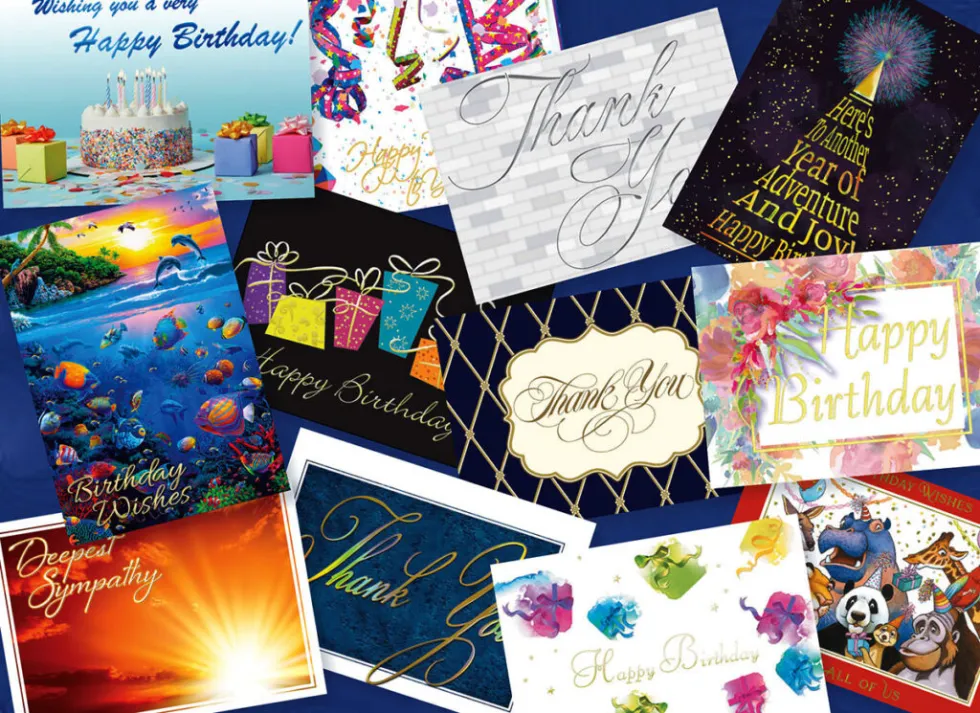
- Write about the giver. Describe who sent you the card. What’s your relationship like? When did you last speak?
- Remember the occasion. Capture why the card arrived — a birthday, a tough time, a new adventure. Revisit what you felt when you first received it.
- Honor emotions. Cards often surface feelings — grief, joy, gratitude, longing. Write about what that card stirs up now, even if your feelings have changed.
- Track changes over time. Re-read an older card and reflect on how things are different today.
This style of writing turns your journal into a living memory box. It helps you hold onto what matters and see how far you’ve come, one card at a time.
Creative journaling exercises with greeting card prompts
Gratitude and affirmation journaling
- Gratitude list inspired by card wishes. Reread the wishes inside the card. List three things in your life right now that fit those wishes.
- Affirmations from compliments. If a card says “you’re always there for me,” turn that into a personal affirmation: “I am supportive and reliable.”
- Rewrite the wish for yourself. Take the main line (“Wishing you joy”) and turn it into a prompt: “How can I bring more joy into my day?”
Storytelling and memory exploration
- Recount the story of the card. Who sent it, for what occasion, and where were you when you received it?
- Invent a narrative from the imagery. Look at the card’s picture and write a short scene inspired by it.
- Write from another perspective. Imagine you are the person who wrote the card, or the card itself. This grows empathy and shows connections from a new angle.
Mindfulness and emotional processing
- What did the card trigger? Notice what feelings come up as you look at it, and describe them in detail.
- Mindful observation. Study the image and describe every color, texture, or symbol without judgment.
- Let go or hold on. Free-write about what you want to release, or what you want to keep close.
- Breathe and respond. After reading the card, take three deep breaths, then write about what’s different.
Group activities and community-building
Prompt card swaps and collaborative journaling
A card swap is easy to set up and always full of surprises. Each participant brings a greeting card, or makes one from scratch, with a question, quote, or image meant to spark thought. The cards get mixed in a pile, then everyone draws one at random.
- Exchange of ideas. Swapping mixes up viewpoints and gets you writing about themes you may not have chosen.
- Partner journaling. Pair up, respond to the prompt together, then share entries with the group.
- Group collaborative journals. Use a shared notebook, with each person adding their own response or drawing to a group entry.
Game-like creativity challenges
- Prompt draw games. Place a stack face-down. Each person draws one and has five minutes to write — no overthinking.
- Round robin stories. Start a story using your prompt, then pass your page to the next person.
- Art and writing mashups. Pair cards with art supplies, then share finished pieces.
- Theme nights. Choose a theme — gratitude, adventure, change — and use cards that fit it for the session.
Sustainable artistry: eco-conscious upcycling
The environmental value of reusing cards
Each reused card keeps material out of the trash and lessens the demand for new products. By upcycling, you help:
- Cut waste. Every card you save from the landfill reduces your footprint.
- Save energy and water. Manufacturing new cards — even recycled ones — uses resources. Reusing skips this entirely.
- Support forest conservation. Fewer new cards means less demand for freshly harvested paper.
Watch for extra decorations, though. Glitter, plastic gems, ribbons, and metallic finishes can make cards hard to recycle later, so removing these before reusing the paper is a smart step.
Practical tips for sourcing cards to upcycle
- Save all incoming cards. Tuck them in a drawer or file so they don’t get lost.
- Ask friends and family. Many people are happy to share rather than toss theirs.
- Check community groups. Swap or freecycle groups sometimes collect used cards after holiday seasons.
- Visit thrift stores. Some carry packs of unsent cards, perfect for upcycling.
- Pick clean, simple designs. Cards without glued or metallic decorations are easiest to repurpose.
If you plan to share or sell upcycled artwork, use only original fronts or snippets — don’t make exact reproductions, due to possible copyright issues. For personal journals, cutting, layering, or collaging small sections is both legal and mindful.
Conclusion
Greeting cards offer more than memories — they can unlock new layers in your journaling practice, from creative thinking to emotional healing. You get the power of nostalgia, the spark of original art, and the push to write when words won’t come on their own. Upcycling cards turns everyday items into fresh prompts and keeps your process sustainable.
Try it for a week: pick a card, tape a piece of it onto your journal page, and see where your thoughts go. Let the images, colors, and kind words guide you — no rules, no pressure.
Ready to send some?
Every design in our catalog is imprintable with your own message, and envelopes are included.