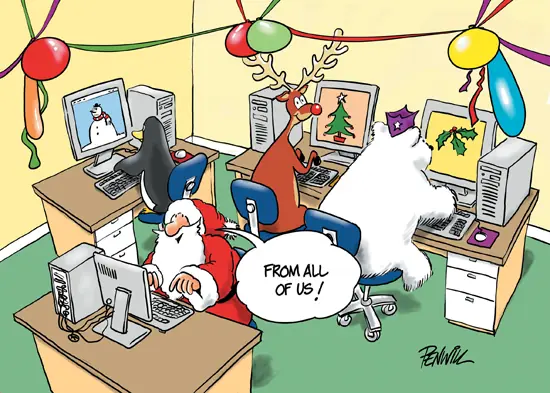
Do holiday cards actually work for a trade business?
A card doesn't sell a furnace. It keeps you the default when the furnace quits, which is worth more. Run the math the way you'd run it on a truck wrap: a card costs about five dollars all in by the time it's printed, imprinted and mailed. One retained customer covers a hundred of them. The honest version is that it's one touch in a retention program — and the cheapest line on that list by a distance.
Should we send to every customer or just the good ones?
Start with anyone you've served in the last three years and every maintenance-agreement household regardless of age. If the budget is tight, cut by recency, not by ticket size — the $180 drain call is often the household that later needs the whole system. Add your suppliers, your inspectors and the general contractors and realtors who feed you work. Those names are cheap to include and they are where next year's jobs come from.
What do we write on it?
Thank you for having us in your home this year. That's it. No coupon, no tune-up special, no QR code to a review page. The moment you add an offer, it reads as mail from a company instead of a note from the people who fixed your heat, and it goes in the recycling with the rest of December.
When should a contractor mail?
Early November, before the pile arrives. Landscapers and roofers should order in September while the season is still paying for it and the crews aren't scattered. HVAC should order in September for the opposite reason — by the time the first cold snap hits, nobody in your office is going to have an afternoon to think about cards. The early-order discount takes 25% off the card price through October 15 either way.