
All Occasion Cards
All Occasion Cards — Birthday, Thank You & Sympathy
Thoughtful everyday cards for sending to those important to you. A practical way to let others know you care.
Good-tier pricing, with envelopes and imprinting included. Early-order discounts come off on top of these prices — 20% by November 16, 10% by December 11. These are the everyday prices — this season’s early-order discounts have closed. Better and Best designs cost more — see all three tiers and price your order.
December is the busiest expression of the work, not the whole of it. A birthday card from an advisor in April does something a December card can't — it arrives when nothing else does. Year-round is the practice. The holidays are just when everybody remembers.
4 categories
Every design below is printed and imprinted to order. Prices shown are per card with envelopes at 1,000 — see the pricing page for your quantity.



The whole family
Every design in all occasion cards
All 59 of them, by family. Every one is printed and imprinted to order, and imprinting is free.
Birthday Cards
- Cupcake Birthday Wishes
- Tornado of Balloons and Packages
- It's A Legal Birthday!
- Bright Birthday Wishes!
- Have a slice for your Birthday!
- Bold Birthday Wishes
- Colorful Confetti Birthday
- The Cake, The Gifts and the Balloons
- Animalistic Birthday
- Bunches of Birthday Wishes
- A Birthday Adventure
- Bring On The Cake!
- Birthday Blocks
- We're streaming Birthday Wishes
- Birthday Cheers!
- Happy Birthday, Sunflower!
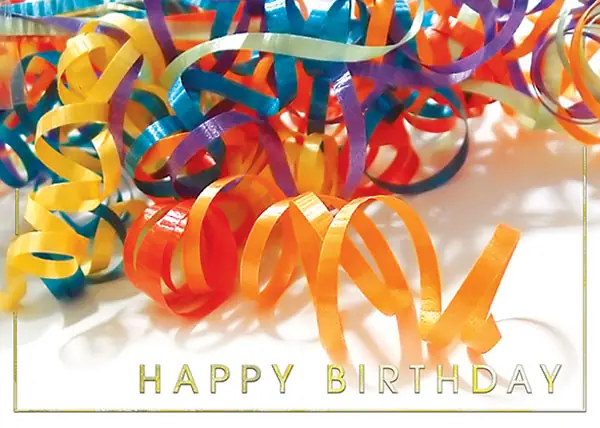
- Curled Birthday Ribbons
- Happy Birthday on Repeat
- Tropical Paradise Birthday Wishes
- Cheerful Birthday Wishes!
- Colorful Confetti!
- Birthday Flair
- Floating Birthday Gift Boxes
- Especially for you!
- Spatter Painted Festive Balloons
- Birthday Fireworks Celebration!
- Birthday Candle Surprise
- Floating Birthday Gifts
- Ribbons and Confetti
- Stacked Packages
- Birthday Party Balloons
- Brilliant Packages
Thank You Cards
- Silver Trust
- Elegant Appreciation
- Thanks For The Loyalty
- Tie Dye Thank You
- Eucalyptus Appreciation
- Many ways to say "Thanks!"
- Multi-lingual Thanks!
- Subway Tile Thank You
- Handsome Blue Marble Thank You
- Handsome blue diamond Thank You
- Elegant Thank You
- Handsome Green Marble Thank You
- Thank you Chevron
- Thank you, thank you, thank you
- Elegant Thank you
Sending as a business?
We've built a page for each of the buyers who order from us most. Different rooms, different rules.
- Law Firms & Attorneys
- Nonprofits & Faith Organizations
- Healthcare & Medical Practices
- Accountants & CPA Firms
- Financial Advisors & Wealth Managers
- Real Estate Agents & Brokers
- Insurance Agents & Agencies
- Mortgage Brokers, Banks & Credit Unions
- HVAC, Plumbing & Home Services
- Auto Dealers & Service Centers
- Funeral Homes & Senior Living
- Golf Courses, Clubs & Golfers
- Logo Cards & Branded Greetings
Not sure where to start?
Tell us who you're sending to and roughly how many. We've been doing this since 2003 — we'll point you at the three or four designs that actually fit, and you can take it from there.